of people with metastatic breast cancer could develop an ESR1 mutation while on their first hormone therapy.

ETCAMAH is for adults with HR+/HER2- metastatic breast cancer in combination with a CDK4/6 inhibitor (palbociclib, ribociclib, or abemaciclib) upon detection of an ESR1 mutation during first-line hormone therapy. ETCAMAH is approved based on a study that measured time to cancer growth or spread (progression-free survival). ETCAMAH is still being studied to confirm these results.
Metastatic breast cancer overview
Proactive monitoring can help inform treatment

ESR1 mutation monitoring is used to catch early signs of changes in breast cancer before scans show cancer is progressing. Progression means the cancer is growing or spreading.

If you test positive for an ESR1 mutation, proactive monitoring can help you stay on your first CDK4/6 inhibitor longer with available treatment options.

Proactive monitoring means you will receive a routinely scheduled blood test for the ESR1 mutation every 3 months while on your first treatment for metastatic breast cancer.

Metastatic breast cancer is cancer that has spread beyond the original tumor to other parts of the body.
Proactive monitoring for ESR1 mutations during your first treatment for metastatic breast cancer may help you get ahead of the cancer for longer.
How do my metastatic breast cancer treatments work?
A common treatment regimen for HR-positive, HER2-negative mBC includes a combination of 2 drugs to control metastatic breast cancer:
A hormone therapy called an aromatase inhibitor (anastrozole, exemestane, or letrozole)

A targeted therapy called a CDK4/6 inhibitor such as palbociclib (Ibrance®), ribociclib (Kisqali®), or abemaciclib (Verzenio®)
This treatment combination works to slow your cancer from growing and spreading

Your hormonal therapy blocks the amount of hormone called estrogen that is telling your cancer to grow

Your CDK4/6 inhibitor works together with your hormone therapy to block certain signals that fuel the spread of cancer
The goal of your first treatment for mBC is to maximize time on hormone therapy + CDK4/6 inhibitor.
Detecting an ESR1 mutation as early as possible may help you achieve your treatment goals.
The ESR1 mutation that causes treatment resistance can be found during routine blood testing.
ESR1 mutation and treatment resistance
What is an ESR1 mutation and how does treatment resistance work?
Cancer can change and become resistant to treatment. These changes can signal that your cancer could start growing and getting worse.
One of the most common changes in HR-positive, HER2-negative mBC is an ESR1 mutation. An ESR1 mutation is a known signal that your cancer could start to become resistant to your current hormone therapy.

of people with metastatic breast cancer could develop an ESR1 mutation while on their first hormone therapy.
Before treatment
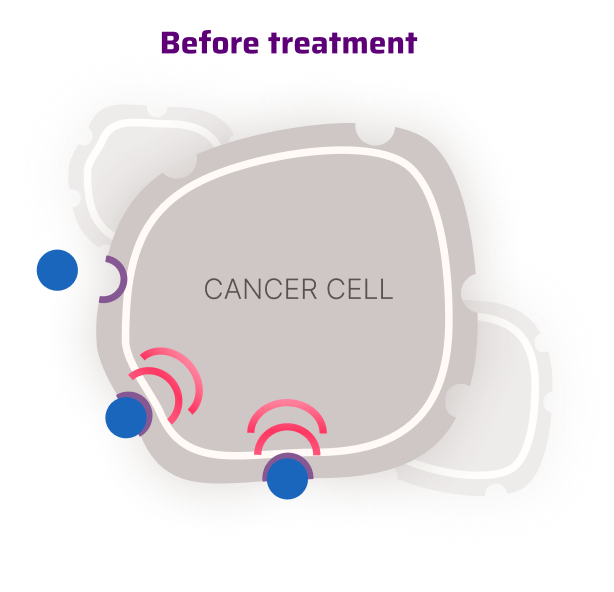

hormones

hormone receptors
Hormones like estrogen attach to Hormone Receptors and can cause overactive signaling telling your breast cancer to grow.
1/7
Before treatment
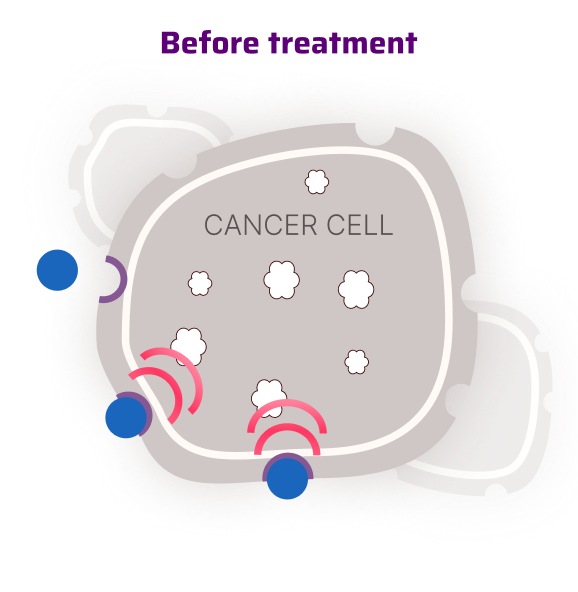

CDK4/6 proteins

OVERACTIve SIGNALING
Overactive signaling can trigger certain proteins, like CDK4 and CDK6. This can cause breast cancer cells to multiply.
2/7
Typical first treatment:
aromatase inhibitors
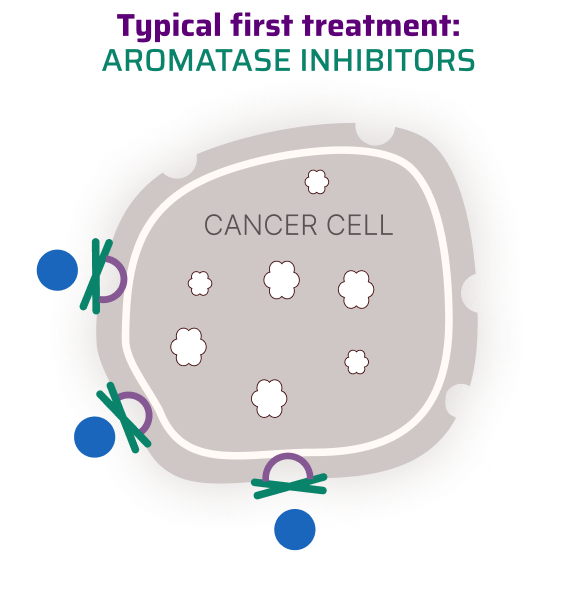
hormones

AROMATASE INHIBITORS
AROMATASE INHIBITORS block the amount of estrogen that is telling your breast cancer cells to grow.
3/7
Typical first treatment:
CDK4/6 inhibitors
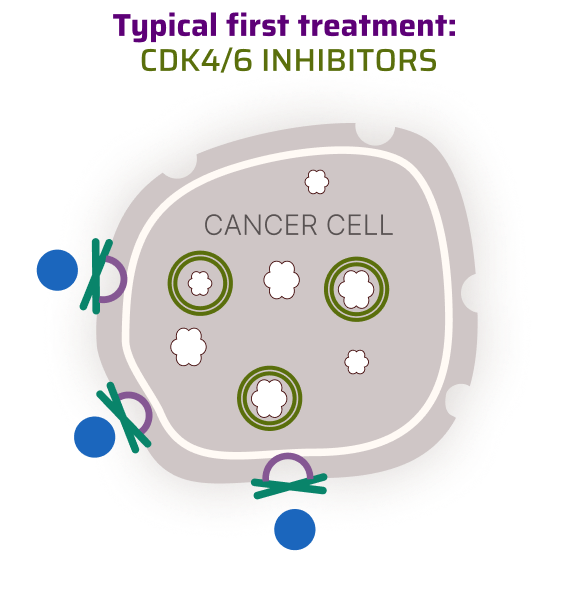
CDK4/6 proteins

CDK4/6 Inhibitors
CDK4/6 INHIBITORS work by blocking the CDK4/6 proteins to prevent cells from multiplying and dividing.
4/7
Impact of ESR1 mutations
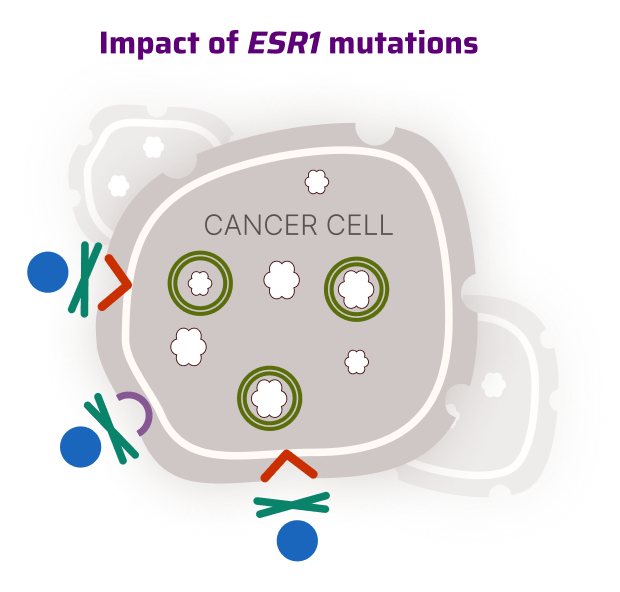
hormone receptors

ESR1-mutated hormone receptor
Over time, ESR1 mutations could start to develop in breast cancer cells.
5/7
Impact of ESR1 mutations
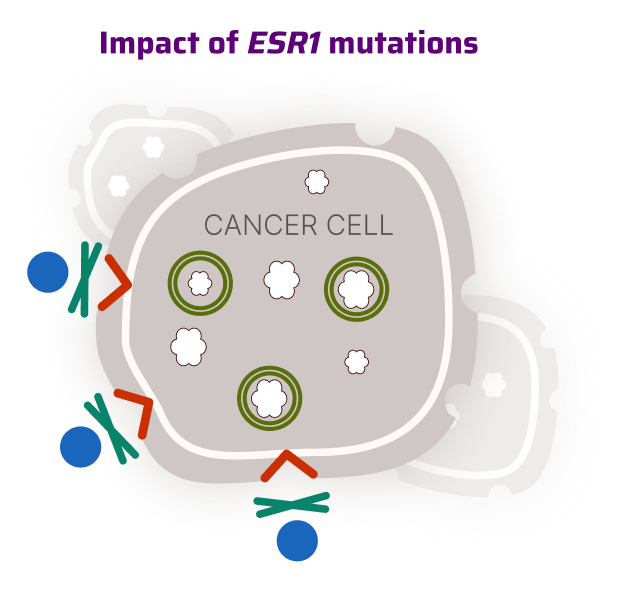
ESR1-mutated hormone receptor
AROMATASE INHIBITORS
This could result in breast cancer cells becoming RESISTANT to certain hormone therapies like aromatase inhibitorS.
6/7
Impact of ESR1 mutations
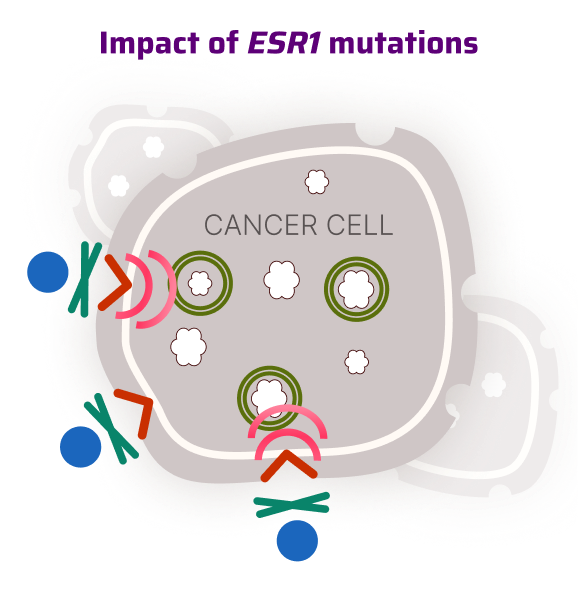
ESR1-mutated hormone receptor
OVERACTIve SIGNALING
ESR1 MUTATIONS could also make hormone receptors overactive and could make the breast cancer cells grow and spread.
7/7

If an ESR1 mutation is identified early, talk to your doctor about replacing your hormone therapy so you may be able to stay on your palbociclib (Ibrance®), ribociclib (Kisqali®), or abemaciclib (Verzenio®) longer.
ESR1 mutation testing
How do I get tested for ESR1 mutation?
An additional blood test can be added to your routine blood work to look for signals that your cancer is changing.
Ask your oncologist about your ESR1 mutation status
Ask for ESR1 mutation monitoring to be added to your routine blood work to monitor cancer every 3 months

Discuss if any change in treatment is recommended given ESR1 mutation status
ESR1 mutation discussion guide

Use this discussion guide for your next doctor's appointment to talk about proactive monitoring during your first treatment for metastatic breast cancer
Ask your doctor about monitoring for ESR1 mutations as part of your routine blood work while on your first treatment for metastatic breast cancer
Learn more about ETCAMAH
See how Etcamah worksDiscover how ETCAMAH and your CDK4/6 inhibitor may help
See results with EtcamahIMPORTANT SAFETY INFORMATION ABOUT ETCAMAH® (camizestrant)
IMPORTANT SAFETY INFORMATION ABOUT ETCAMAH® (camizestrant)
What is the most important information I should know about ETCAMAH?
ETCAMAH can cause serious side effects including:
Get medical help right away if you get the following signs or symptoms of QTc prolongation and bradycardia including: dizziness, lightheadedness, fainting, feeling that your heart is pounding or racing (palpitations), shortness of breath, or chest pain.
Your healthcare provider may delay treatment or completely stop treatment with ETCAMAH if you have severe side effects.
Before you take ETCAMAH, tell your healthcare provider if you:
Tell your healthcare provider about all the medicines you take, including prescription and over‑the‑counter medicines, vitamins, and herbal supplements. Especially tell your healthcare provider if you take any heart and blood pressure medicines.
ETCAMAH may affect the way other medicines work, and other medicines may affect how ETCAMAH works. Know the medicines you take. Keep a list of them to show your healthcare provider or pharmacist when you get a new medicine.
What are the possible side effects of ETCAMAH?
ETCAMAH can cause serious side effects, including:
The most common side effects of ETCAMAH in combination with a CDK4/6 inhibitor include:
ETCAMAH may cause fertility problems in females and males, which may affect your ability to have children. Talk to your healthcare provider if you have concerns about fertility.
These are not all the possible side effects of ETCAMAH.
Call your healthcare provider for medical advice about side effects.
What is ETCAMAH?
ETCAMAH is a prescription medicine used in combination with a CDK4/6 inhibitor (abemaciclib, palbociclib, or ribociclib) to treat adults with hormone receptor (HR)-positive, human epidermal growth factor receptor 2 (HER2)-negative breast cancer that:
Your healthcare provider will perform a test to make sure that ETCAMAH is right for you.
It is not known if ETCAMAH is safe and effective in children.
Please see full Prescribing Information, including Boxed WARNING, and Patient Information for ETCAMAH.
You may report side effects related to AstraZeneca products .