On ETCAMAH + CDK4/6 inhibitor, patients’ time before their quality of life worsened was nearly 2 years
ETCAMAH is for adults with HR+/HER2- metastatic breast cancer in combination with a CDK4/6 inhibitor (palbociclib, ribociclib, or abemaciclib) upon detection of an ESR1 mutation during first-line hormone therapy. ETCAMAH is approved based on a study that measured time to cancer growth or spread (progression-free survival). ETCAMAH is still being studied to confirm these results.
Why Etcamah
Replacing first hormone treatment with ETCAMAH reduced the risk of progression by more than half vs staying on current hormone therapy.

There was a 56% lower
risk of cancer growing
or spreading with
ETCAMAH + CDK4/6 inhibitor
How ETCAMAH was studied
Early intervention with ETCAMAH was studied in a clinical trial
ETCAMAH was studied in a global clinical trial that included 315 patients with HR-positive/HER2-negative metastatic breast cancer who were on their first treatment with hormone therapy and a CDK4/6 inhibitor.
 In a clinical trial, patients with HR-positive/HER2-negative metastatic breast cancer were on first-line treatment for at least 6 months with:
a hormone treatment called an aromatase inhibitor (anastrozole or letrozole)

a targeted therapy called a CDK4/6 inhibitor (palbociclib, ribociclib, or abemaciclib)
Upon identifying an early signal of treatment resistance called an ESR1 mutation, the goal of the clinical trial was to see if replacing first hormone therapy with ETCAMAH could delay cancer progression vs staying on their first hormone therapy.
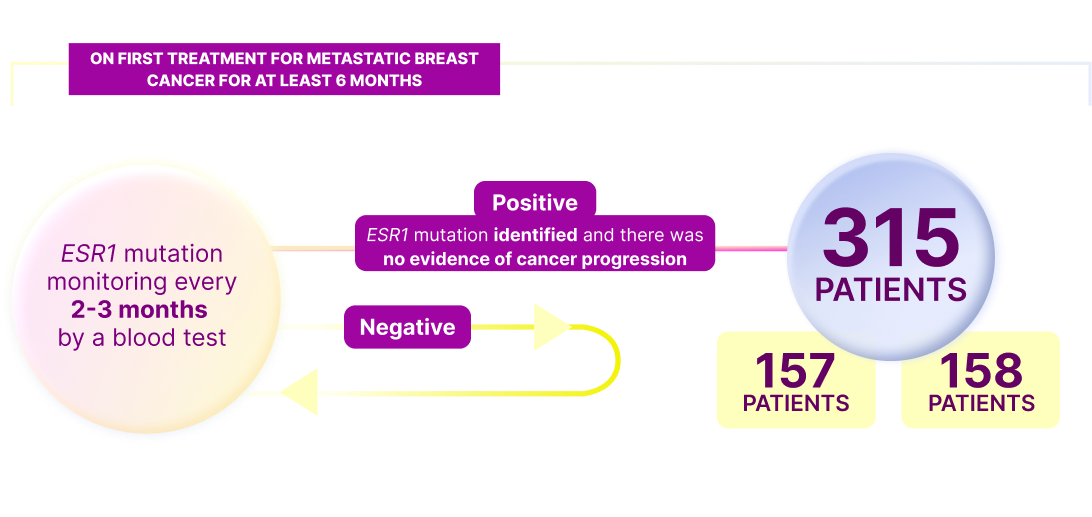
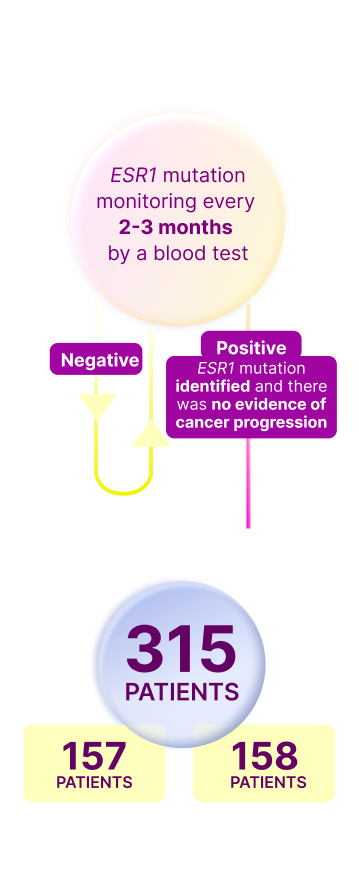
The total percentage of patients on palbociclib was 76%, ribociclib was 15%, and abemaciclib was 10%.
Key outcomes of the trial
ETCAMAH helped patients stay on their first CDK4/6 inhibitor treatment regimen (palbociclib, ribociclib, or abemaciclib) for longer after testing positive for an ESR1 mutation.
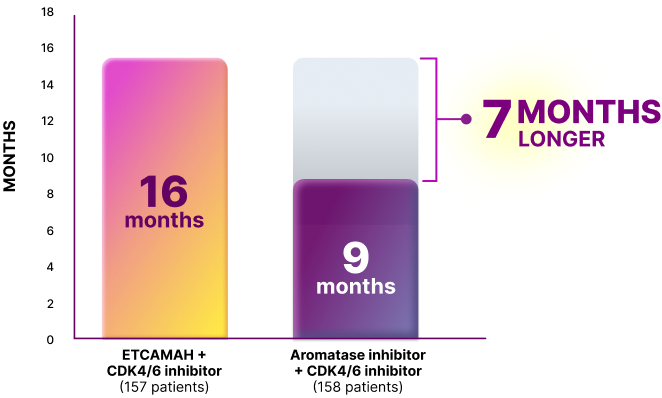
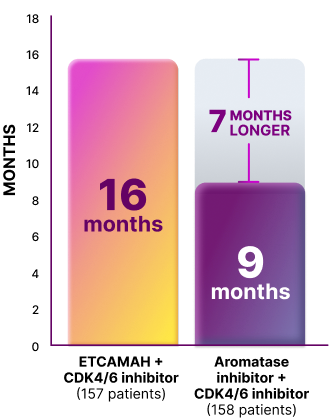
ETCAMAH + CDK4/6 inhibitor delayed disease progression by 7 months longer than staying on first hormone therapy + CDK4/6 inhibitor
Median progression-free survival measures the amount of time that half of the people enrolled in the study were on treatment before their cancer started growing or spreading.
Median is the middle number in a group of numbers arranged from lowest to highest.
ETCAMAH may not work for everyone. Individual results may vary.
Patient-reported quality-of-life data with ETCAMAH
In the clinical trial, patients completed a 30-question survey that included measures of quality of life. Patients answered questions in the survey related to: overall health, symptoms (pain, fatigue, shortness of breath), functioning (physical, role, mental, emotional, social).
MEDIAN TIME UNTIL OVERALL QUALITY OF LIFE WORSENED*
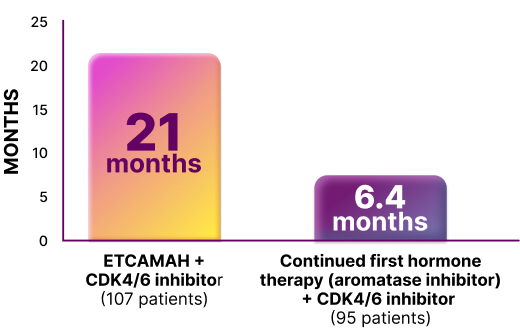
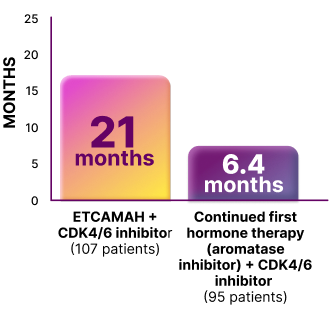
On ETCAMAH + CDK4/6 inhibitor, patients’ time before their quality of life worsened was nearly 2 years
*Measurements were defined by deterioration, or worsening, which was considered to be a clinically meaningful reduction in quality of life from the start of the trial.
Every patient is different and your results may vary. Talk to your doctor if you have any questions about these data or ETCAMAH.
Consider these results carefully. Multiple factors could have an influence on the results. They may be treatment related, disease related, or even unrelated factors and they may not include adequate assessment of all expected treatment-related symptoms.
Talk to your doctor about your treatment goals and what matters most to you with your treatment plan
Learn more about ETCAMAH
See how Etcamah worksPotential side effects with
ETCAMAH
IMPORTANT SAFETY INFORMATION ABOUT ETCAMAH® (camizestrant)
IMPORTANT SAFETY INFORMATION ABOUT ETCAMAH® (camizestrant)
What is the most important information I should know about ETCAMAH?
ETCAMAH can cause serious side effects including:
Get medical help right away if you get the following signs or symptoms of QTc prolongation and bradycardia including: dizziness, lightheadedness, fainting, feeling that your heart is pounding or racing (palpitations), shortness of breath, or chest pain.
Your healthcare provider may delay treatment or completely stop treatment with ETCAMAH if you have severe side effects.
Before you take ETCAMAH, tell your healthcare provider if you:
Tell your healthcare provider about all the medicines you take, including prescription and over‑the‑counter medicines, vitamins, and herbal supplements. Especially tell your healthcare provider if you take any heart and blood pressure medicines.
ETCAMAH may affect the way other medicines work, and other medicines may affect how ETCAMAH works. Know the medicines you take. Keep a list of them to show your healthcare provider or pharmacist when you get a new medicine.
What are the possible side effects of ETCAMAH?
ETCAMAH can cause serious side effects, including:
The most common side effects of ETCAMAH in combination with a CDK4/6 inhibitor include:
ETCAMAH may cause fertility problems in females and males, which may affect your ability to have children. Talk to your healthcare provider if you have concerns about fertility.
These are not all the possible side effects of ETCAMAH.
Call your healthcare provider for medical advice about side effects.
What is ETCAMAH?
ETCAMAH is a prescription medicine used in combination with a CDK4/6 inhibitor (abemaciclib, palbociclib, or ribociclib) to treat adults with hormone receptor (HR)-positive, human epidermal growth factor receptor 2 (HER2)-negative breast cancer that:
Your healthcare provider will perform a test to make sure that ETCAMAH is right for you.
It is not known if ETCAMAH is safe and effective in children.
Please see full Prescribing Information, including Boxed WARNING, and Patient Information for ETCAMAH.
You may report side effects related to AstraZeneca products .